
Play With Joy
by Andrew Stilwell // March 20, 2026
This story is a part of our 2026 Women's History Month series – highlighting the stories and relationships of the women and women's programs here at Carolina Athletics.
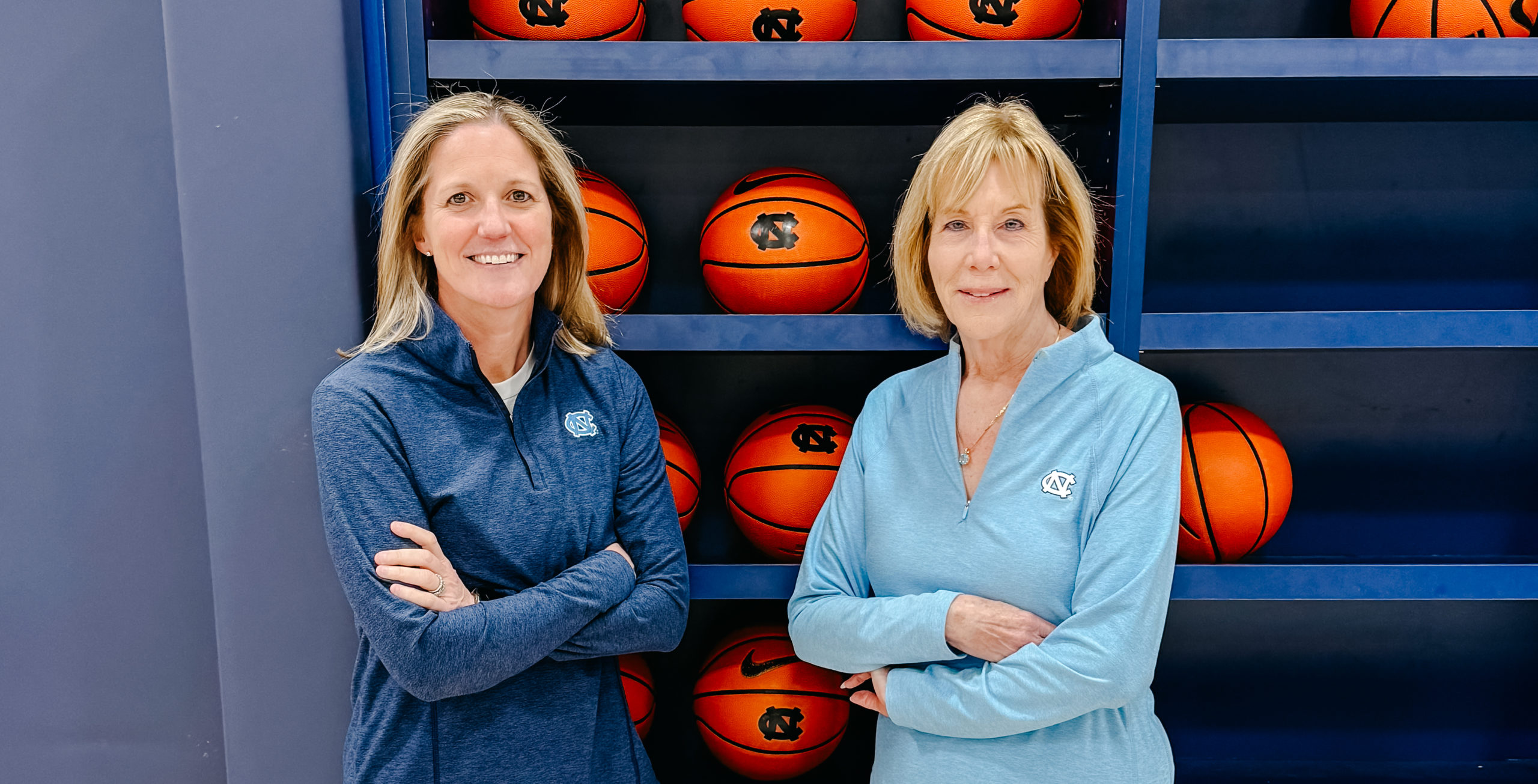
This story is a part of our 2026 Women’s History Month series – highlighting the stories and relationships of the women and women’s programs here at Carolina Athletics.
As Carolina Women’s Basketball huddled in a makeshift locker room inside the Hard Rock Hotel Riviera Maya prior to their first game of this season’s Cancun Challenge, one of the program’s biggest supporters was not physically there, but Catherine Morris’ presence was still felt in the room.
“Remember this: Play with joy. Joy is your strength, your calm, and your fire,” Morris wrote in a text to Head Coach Courtney Banghart. “Let it show in every pass, every rebound, every shot. Trust your teammates, trust your preparation, trust your coaches, trust yourself. Play bold, play united, play fearless, play with passion, and most of all, play with joy, and make these games yours.”
“The way Catherine articulated to this team what their superpower was, it honestly warmed my heart.” Banghart said with a laugh. “I told the team at the time ‘This is someone who loves you and knows you, and we’ve got to play with her spirit.’”
As Morris was home, caring for her father, Carolina would go on to win all three games at the Cancun Challenge, with decisive victories over South Dakota State, Kansas State, and Columbia.
Even in absence, Morris was present, something both Coach Banghart and the Women’s Basketball program have come to rely on.
HOW IT STARTED
Morris’ connection to Carolina Women’s Basketball started in 1973, a time when women’s sports were housed under the physical education department rather than the athletic department. She was a member of the third-ever Carolina Women’s Basketball team during her freshman year.
“Coming from a small high school where my graduating class only had 47 people, I was surprised and excited to make the team,” Morris said. “It was an adventure, trying to go to school at the same time with how much time basketball took out of my schedule. But it was a great way to plug into a small group of people at UNC. That community gave me a good start there.”
During her career in public education and later the robotics industry, Morris began to lose touch with the program. It wasn’t until Banghart was hired as the head coach when Morris found her way back to it.
“I did take a break for a while,” Morris admitted. “With work/life balance, I wasn’t following the sport very closely. I knew what was going on, but it wasn’t until Courtney came to Chapel Hill that I really got involved with Women’s Basketball again.
She was introduced to Banghart through supporters Ranjan Sharma and Stacey Lawson, who suggested the two women connect. From there, it immediately started to click.
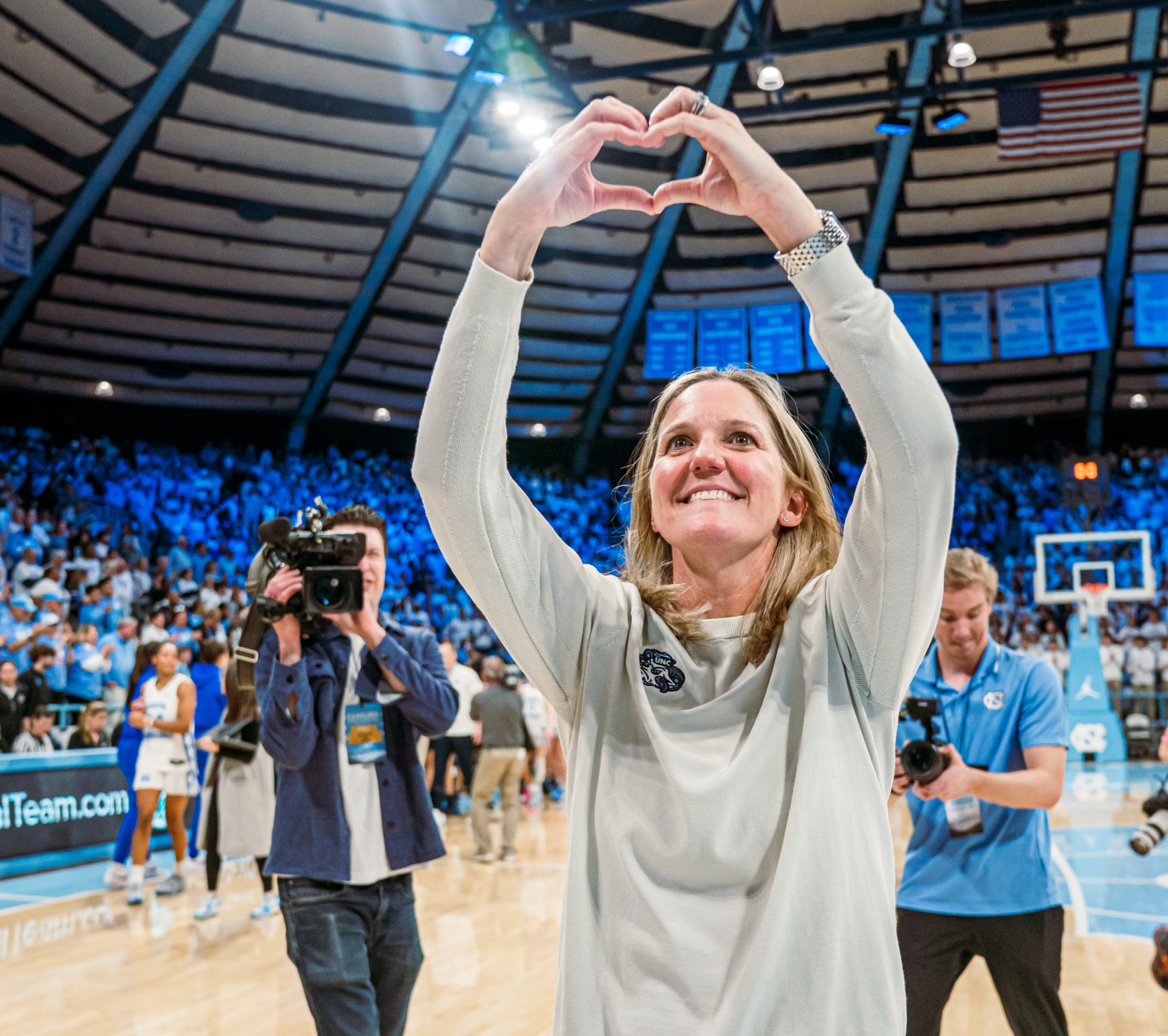
“From the very beginning, there was a connection,” Morris said. “She was just so real.”
When Banghart first came to Chapel Hill, there was a level of uncertainty with the transition. Morris was eager to get in on the “ground level” and support not only the program, but Banghart as well.
“I just got ready to work,” Banghart said. “Catherine was one of the very first people who leaned in. She was someone who had been part of the program before who said, ‘I’m going to pay attention and support this.’”
That belief was reinforced the more Morris observed.
“From the very beginning, I connected with Courtney and saw what kind of coach she was. Even in the toughest moments, I never saw her lose her cool. She was always calm, encouraging, and teaching,” Morris said. “It was obvious how much she cared about the program, this school, and the young ladies she was developing. It’s more than just basketball. She’s helping these young women become strong, confident people. I wanted to be part of that.”
She became an advocate for the program, encouraging others to invest in what was being built in Chapel Hill.
“I knew how difficult it was for her in the beginning — with fans, with funding, with everything,” she continued. “On one of our first Zoom calls, I told everyone that you can’t expect someone to come in, in this day and age, and create a strong program if you’re not going to give them the tools. So, if we want the end product, we all have to step up to the plate and do what we can to support her.”
Morris’ support started small but has continued to grow alongside the program itself.
“When we got here, we just needed people in the stands, so Catherine would be in the stands supporting us,” Banghart said. “We didn’t know what we needed at the time, so we didn’t ask for things that we didn’t need. As our needs changed, so did her level of support.
As someone who has coached women my whole life, that meant everything. That’s exactly what I want for our players — to be strong enough to say what needs to be said and back it up.”
HOW IT GREW
Be it in her professional life or supporting Carolina Athletics, Morris built a career in spaces where women were the exception, rather than the norm.
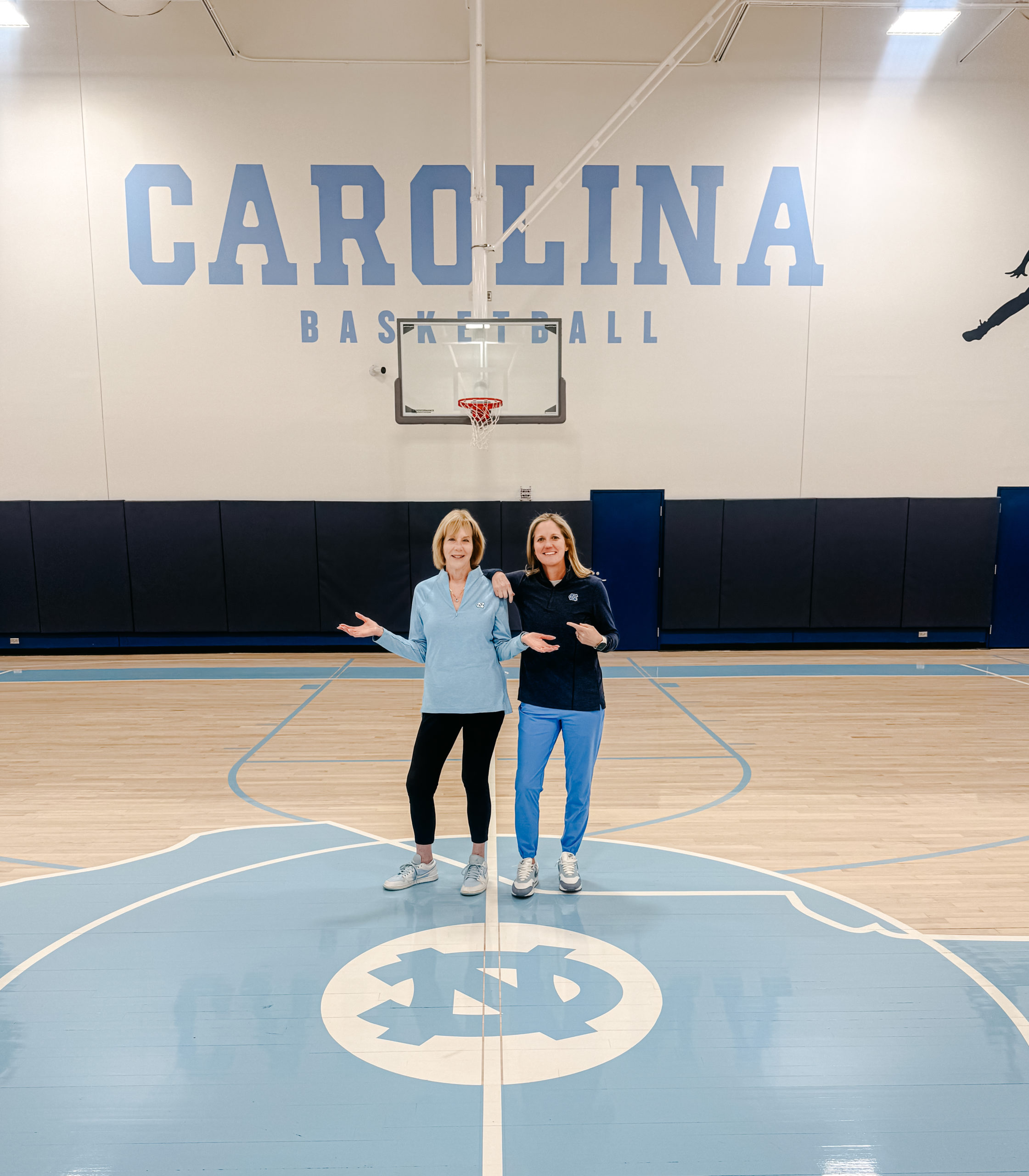
After starting in public education, she transitioned into the robotics industry, which is an environment she describes simply as “a man’s world.”
“At the time, it was totally a man’s world in robotics and automotive,” Morris explained. “But it was because I was an athlete that I wouldn’t back down from anyone. I became a spokesperson for our company, and later the robotics industry as a whole.”
Towards the end of her career, Morris was awarded the Engelberger Award for Leadership, widely considered the world’s most prestigious robotics honor. No stranger to awards in leadership herself, Banghart notes the importance of donors like Morris in a landscape where most major donors to collegiate athletes are still men.
“As a woman, to have given as much as she’s given, that should be screamed from the mountaintops,” Banghart said. “Especially as a woman supporting other women. I could go on forever about the advocacy.”
For Morris, the involvement has never been about recognition.
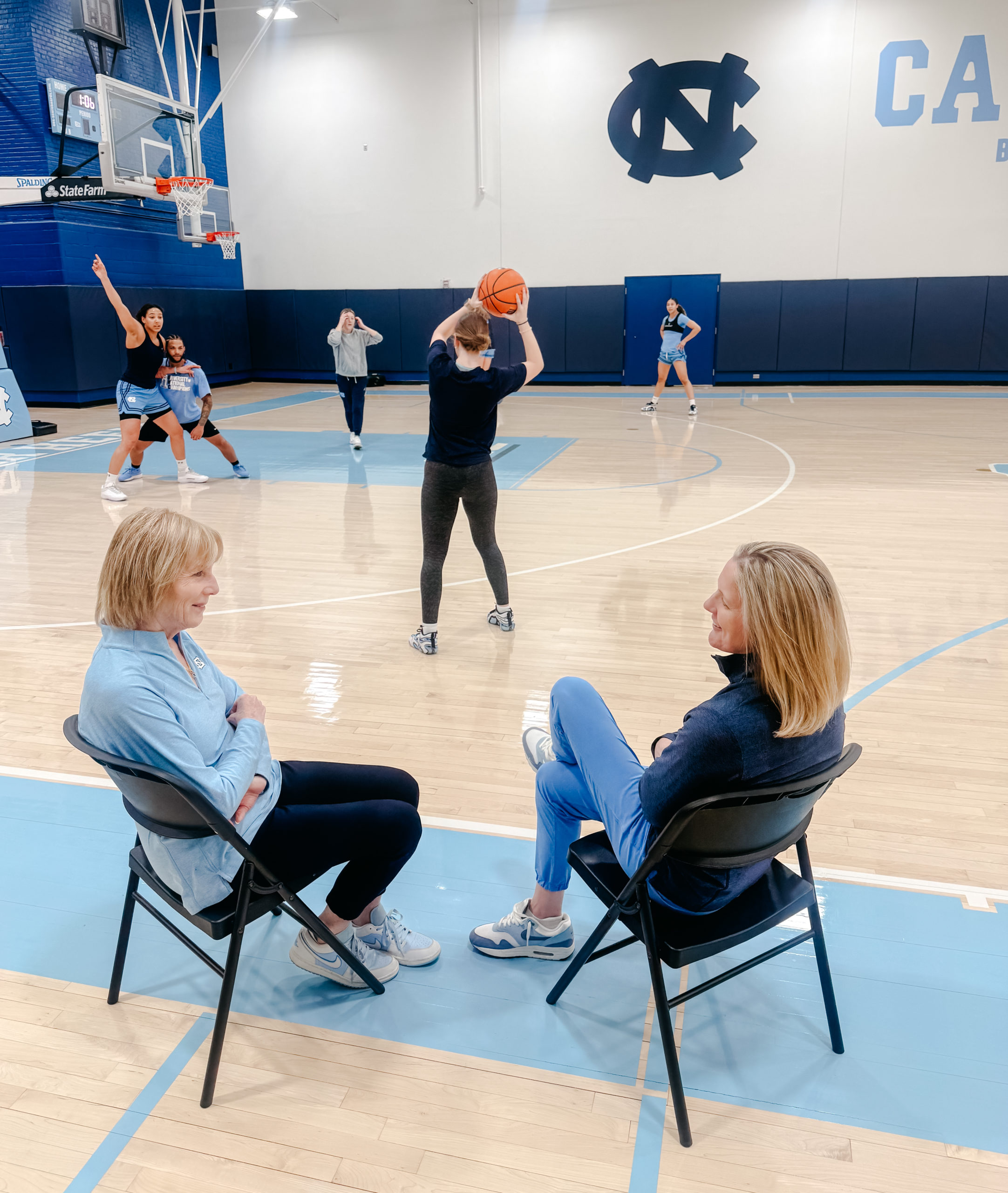
“I think the main thing is just being involved in something bigger than me,” she said. “Supporting Carolina Women’s Basketball is giving the program the opportunity to succeed.
That support, both tangible and symbolic, is felt every day by Banghart. Her office inside of Carmichael Arena bears Morris’ name on a placard by the door, a reflection of both her impact and belief in the program.
“It was important to me that Catherine’s name was on the office,” Banghart said. “If I could have a woman who could invest in us and was a former player, it had to be her. For both our current team and recruits, it’s an important message; the financial support of this office was given by a program alum who now sits on the floor. That is the Carolina Family in action.”
HOW IT’S GOING
In addition to being part of the Carolina family, Morris feels that the Women’s Basketball program has become part of her own family.
“The players and coaches have definitely become an extension of my family, and because we’re also able to interact with the parents, I feel like that about them as well,” Morris said. “It just warms my heart to know that I’ve had a little bit of impact on some of them.”
That feeling goes both ways.
When Morris’ youngest daughter, Ally, visited Chapel Hill for a football game this past season, she struck up a conversation with a few current student-athletes, who were quick to tell her how lucky she was to have Morris as a mom. Ally was even quicker with her response.
“No,” she said. “I think it’s my mom that’s lucky to have y’all.”
“To be involved with a program where you can actually see them and be involved with them, and they let you know how much they appreciate everything you’re doing,” Morris concluded, “I know with philanthropy you’re not actually giving to get, but in a way, I get so much back from them.”