
More than a Scholarship
by Andrew Stilwell // March 11, 2026
This story is a part of our 2026 Women's History Month series – highlighting the stories and relationships of the women and women's programs here at Carolina Athletics.

This story is a part of our 2026 Women’s History Month series – highlighting the stories and relationships of the women and women’s programs here at Carolina Athletics.
Debbie Vetter’s granddaughter was recently working on a school project that involved researching the 50 states. When she reached Wisconsin, she was tasked with naming notable people from the Badger State. Names of actors, singers, and even a vice president were all options – but ultimately ignored in favor of who she saw as the most famous Wisconsinite – Carolina Volleyball’s Zoe Behrendt.
For Vetter, the moment was both funny and deeply meaningful. It was proof of just how much Zoe had become a part of her family’s life. She was not just the Vetters’ honorary scholarship recipient, but “family” in her own right.
EQUALIZING THE OPPORTUNITIES
Debbie and her husband Steve are longtime Rams Club members, deeply embedded in athletics at UNC. Already funding scholarships in both Men’s Basketball and Baseball, when it came time to fund a third scholarship, Debbie made a deliberate decision. If the Vetters were going to expand their financial support, it would be in a women’s sport.
“I said, ‘Well, this time, it needs to be a women’s sport,’” Vetter recalled. “I just feel like we have such great women’s programs at Carolina. I wanted to equalize the opportunities that we were offering to student-athletes.”
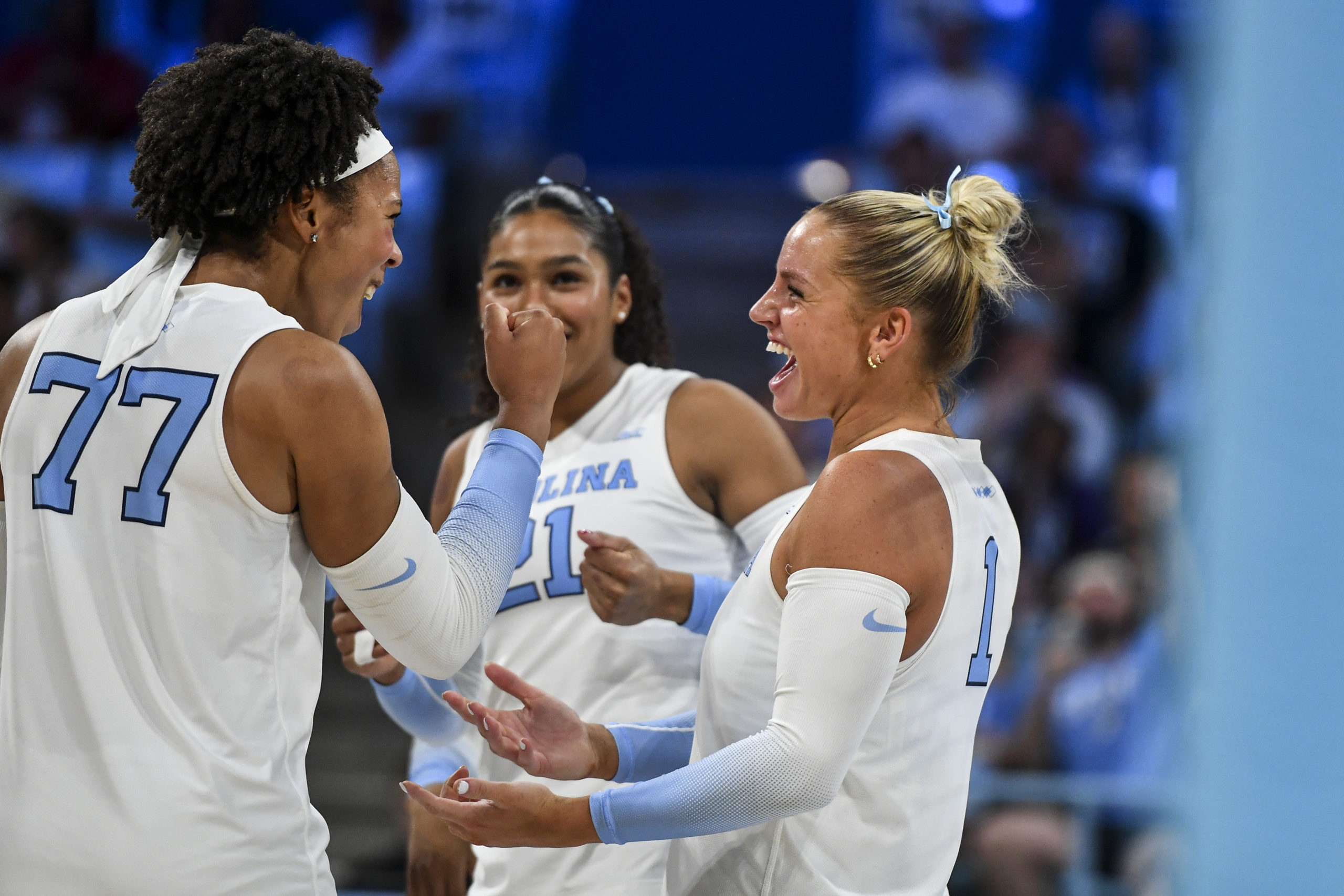
Vetter got her introduction to Volleyball several years ago through fellow Rams Club members Ken and Cheryl Williams. That introduction turned into attending a few matches in person at Carmichael Arena.
Vetter was blown away.
“The thing that really amazed me more than anything is the astounding athleticism of these young women,” Vetter said. “When someone’s jumping three feet off the floor and slamming on the other side of the net, it’s just an exciting sport to watch.”
The Vetters started attending matches more frequently when Behrendt became their scholarship athlete. Now, they rarely miss one.
MORE THAN A DONOR
For Behrendt, who is attending school and playing volleyball nearly 700 miles from her hometown, that level of consistency is important.
“I was first introduced to Debbie through my coach,” Behrendt recalled. “He told me I was going to meet the honorary donor for my scholarship. She was just super easy to get to know and to talk to. She invited me to a few sporting events that weren’t volleyball, just so she and I could bond a little bit.”
The relationship quickly blossomed. Soon after that first meeting, Debbie and Steve became fixtures in the front row at Carmichael Arena, often sitting right next to Zoe’s parents.
“It’s been great not only connecting with Debbie, but connecting Debbie with my parents, who are obviously part of my support system as well,” Behrendt said. “They’ve become an extension of my family. There are very few people I can say that about around here. Having people who are consistently around for very important events in your life – that’s special.”
Sitting at a conference table inside Carmichael Arena, Behrendt turned and addressed Vetter directly.
“Debbie, I haven’t even told you that, but you really have been great and just consistent, and I think consistency is such an important thing in life.”
Behrendt is learning from her scholarship donor too, sometimes in unexpected ways.
“I went to a baseball game with Debbie,” Behrendt recalls “She keeps score while she’s sitting at the game. I’ve never seen anyone do that before, and I grew up in a baseball-loving family. She’s very passionate about Carolina Baseball and seeing her watch the game and keep the stats at the same time was very cool for me.”
The learning isn’t one-sided, as Vetter jokes that she’d love to keep the “book” for volleyball matches too, if one exists. She’s still learning the intricacies of the sport, often relying on the parents of volleyball student–athletes to explain the finer details.

“I love sitting next to the parents,” Vetter laughed. “They can explain to me what’s going on!”
The willingness to learn is part of what makes her presence meaningful.
WHAT COLLEGE ATHLETICS SHOULD BE
When asked about her reasoning for supporting women’s sports, Vetter is clear: it isn’t symbolic. It’s personal.
“You need to interact with these young women, these student-athletes, because they are so much of what college athletics is supposed to be about,” she said.
Vetter recalled a recent volleyball practice she attended where a pair of Behrendt’s teammates – freshmen who had just arrived on campus for the spring – approached her and introduced themselves.
“I don’t know if they were prompted to do that,” Vetter said.” Even if they were, thinking about me at 18, I wouldn’t have been comfortable doing that. It was just lovely.”
For Behrendt, that support carries additional meaning. Seeing a woman choose to invest in the program feels powerful.

Earlier this year, on National Girls & Women in Sports Day, she found herself reflecting on the women who have shaped her journey in athletics – coaches, teammates, mentors – and feels that Vetter’s name should absolutely be included in that list.
“The support that we have from all women in our game is very important, and someone like Debbie supporting us, watching us, wanting us to do well is so meaningful,” she said. “The relationship is obviously donor and student-athlete. But I don’t think of her as a donor. I think of her as a friend and supporter and someone who is always in my corner.”
EXCEEDING EXPECTATIONS
Stepping into Carolina Volleyball has been nothing short of rewarding for Vetter.
“If anything, it’s exceeded our expectations,” she said.
The reasons why seem to increase with each interaction she has with the program: the coaching staff, the culture, the student-athletes who introduce themselves without hesitation, the families who have become friends, if not extended family.
The relationships don’t end when the season does. Over the years, the Vetters have built connections with their student-athletes and their families that extend far beyond the court. The return on their investment has never been about wins and losses.
“All these young people are so grateful, they always come up to us and thank us for our support,” Vetter concluded.
“And I always say, I feel like I get more out of it than I give.”